
Our designs focus on creating a calm atmosphere to support those with anxiety and mood disorders. Every sensory-friendly element is placed intentionally to promote open discussion and effective healing.
We design interactive, engaging health education areas to boost awareness and participation in health initiatives.
We understand the importance of elements like ramps, wide doorways, protective hardware, and dual-accessible consultation rooms to ensure a secure, inclusive environment for everyone.
TRUSTED BY






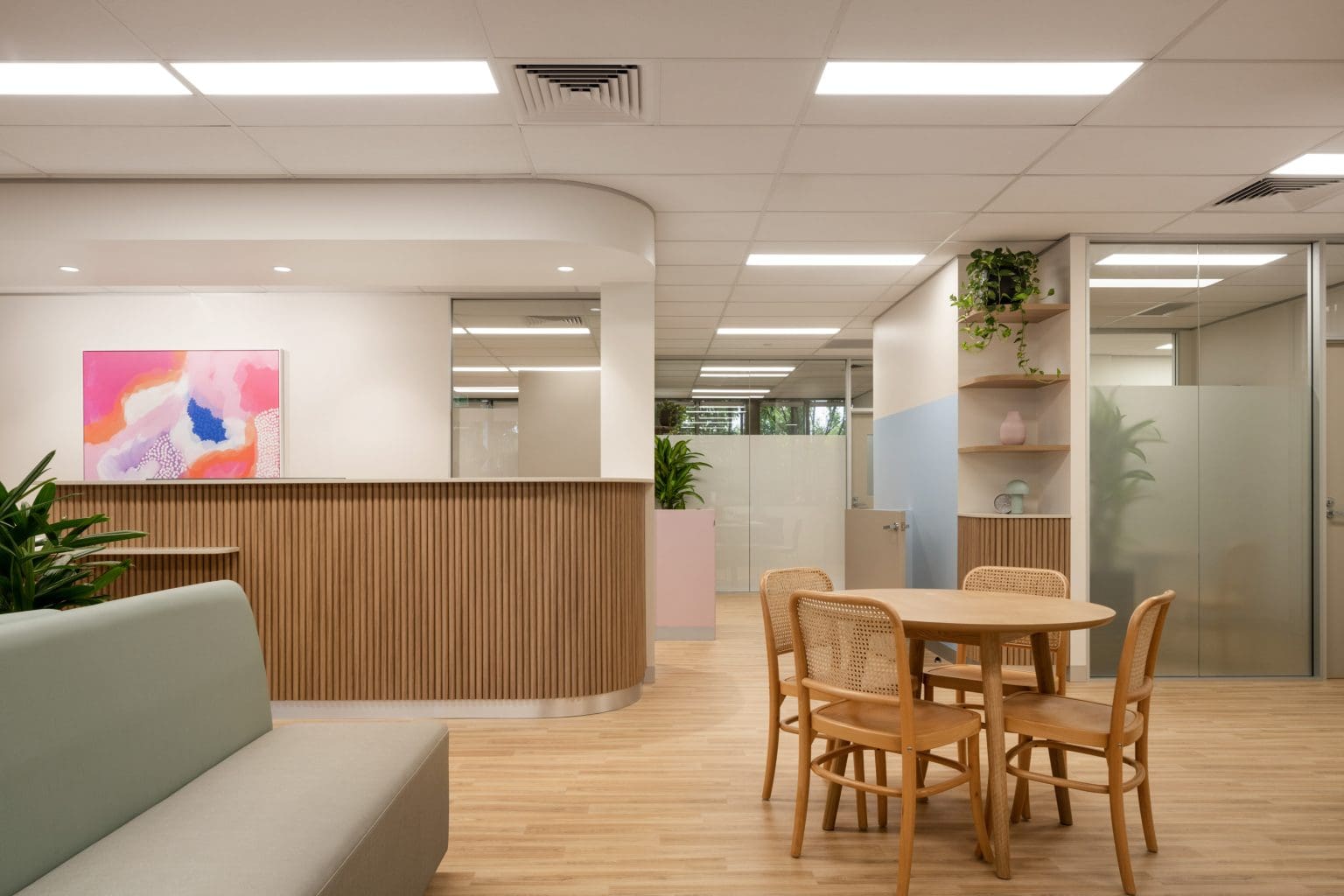
We’re proud to have delivered this new Wellspring Women and Girls Health Hub in Caboolture—a purpose-built, trauma-informed facility offering vital services to women, children, and families in the community. Spanning 481 square metres, the hub was shaped through a collaborative co-design process, with a focus on safety, dignity, and connection.
The Health Hub includes consult rooms, flexible education spaces, kids’ play areas, a laundry, parents’ amenities, and a staff kitchen, all tailored to support women, children, and families in need. Special focus was given to natural light, flow, safety, and warmth to create a space that feels welcoming and non-clinical.
The design features a curated mix of pastel colours, curved walls, internal glazing for transparency, and soft yet durable finishes—creating a warm, inviting environment. The furniture and joinery reflect a commercial quality scaled to feel residential, with an intentionally non-corporate, feminine tone.
From early workshops to final handover, we worked closely with the client to ensure the outcome reflected the community’s vision. The result is a space that empowers women and families with community services and healthcare support.
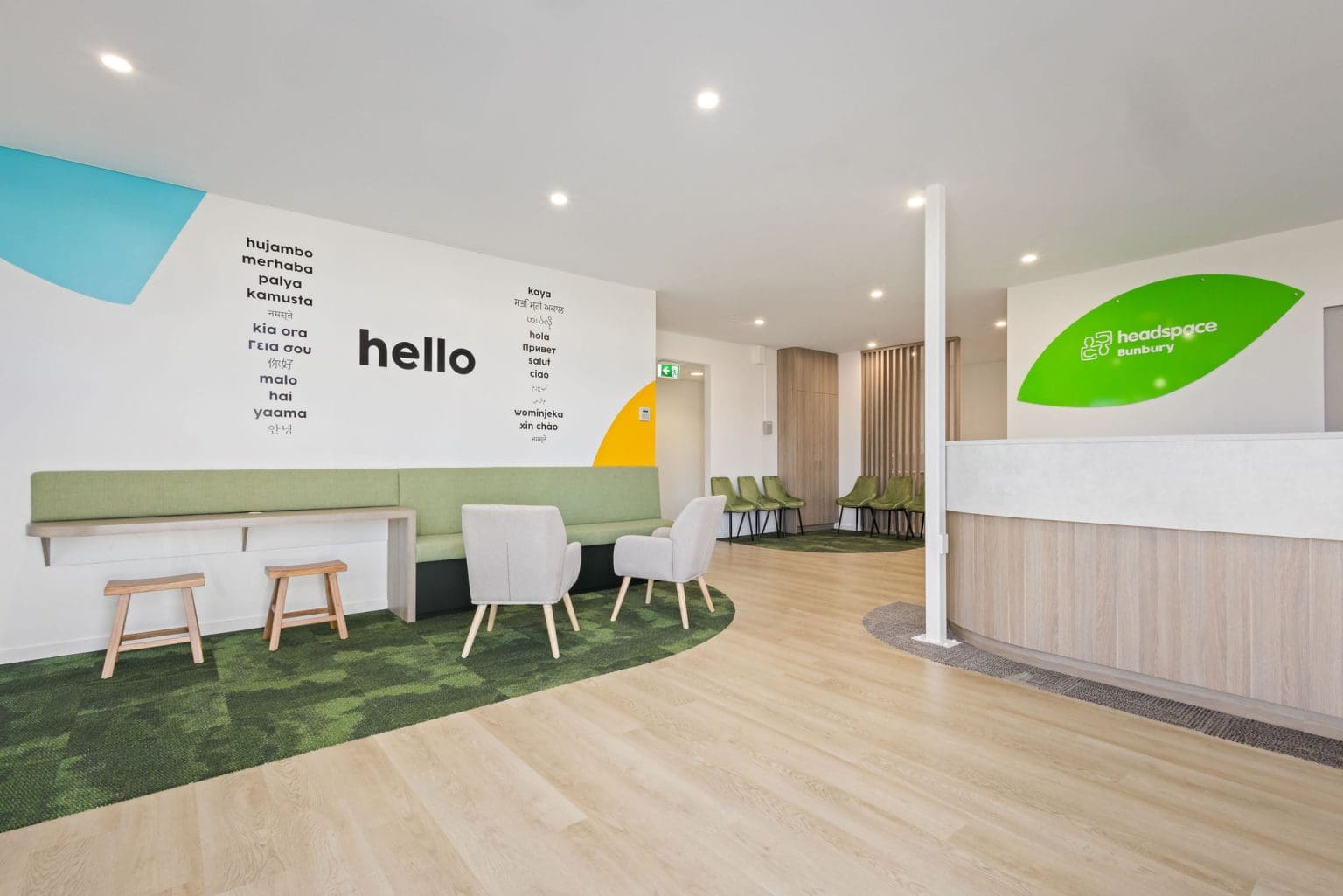
Located two hours from Perth, Western Australia, headspace Bunbury provides vital mental health and well-being services to the local coastal communities. Seeking to modernise and enhance their site, Relationships WA engaged us to deliver a contemporary, functional, and welcoming space.
The upgraded fitout spans two floors, featuring flexible consultation and family rooms designed to balance warmth and professionalism. Bright pops of colour in door signage, combined with a calming furniture palette, create a friendly and inviting atmosphere. Contemporary light-toned vinyl flooring enhances the coastal aesthetic while also serving as a visual wayfinding tool, with strategic carpeted zoning in the reception and waiting areas that define spatial zones and navigation.
As with all Headspace facilities, the fitout includes multi-purpose consultation rooms, dedicated ‘chill-out’ zones, and hot desks to accommodate a diverse range of users and activities. Additional features include a GP consult room, staff workstations and amenities, and a spacious group room on the upper level.
Accessibility and safety were key design considerations, with trauma-informed principles guiding the selection of furniture, wheelchair-accessible layouts, and sensory-friendly finishes. The result is a thoughtfully designed, purpose-built facility that supports the well-being of both staff and visitors.
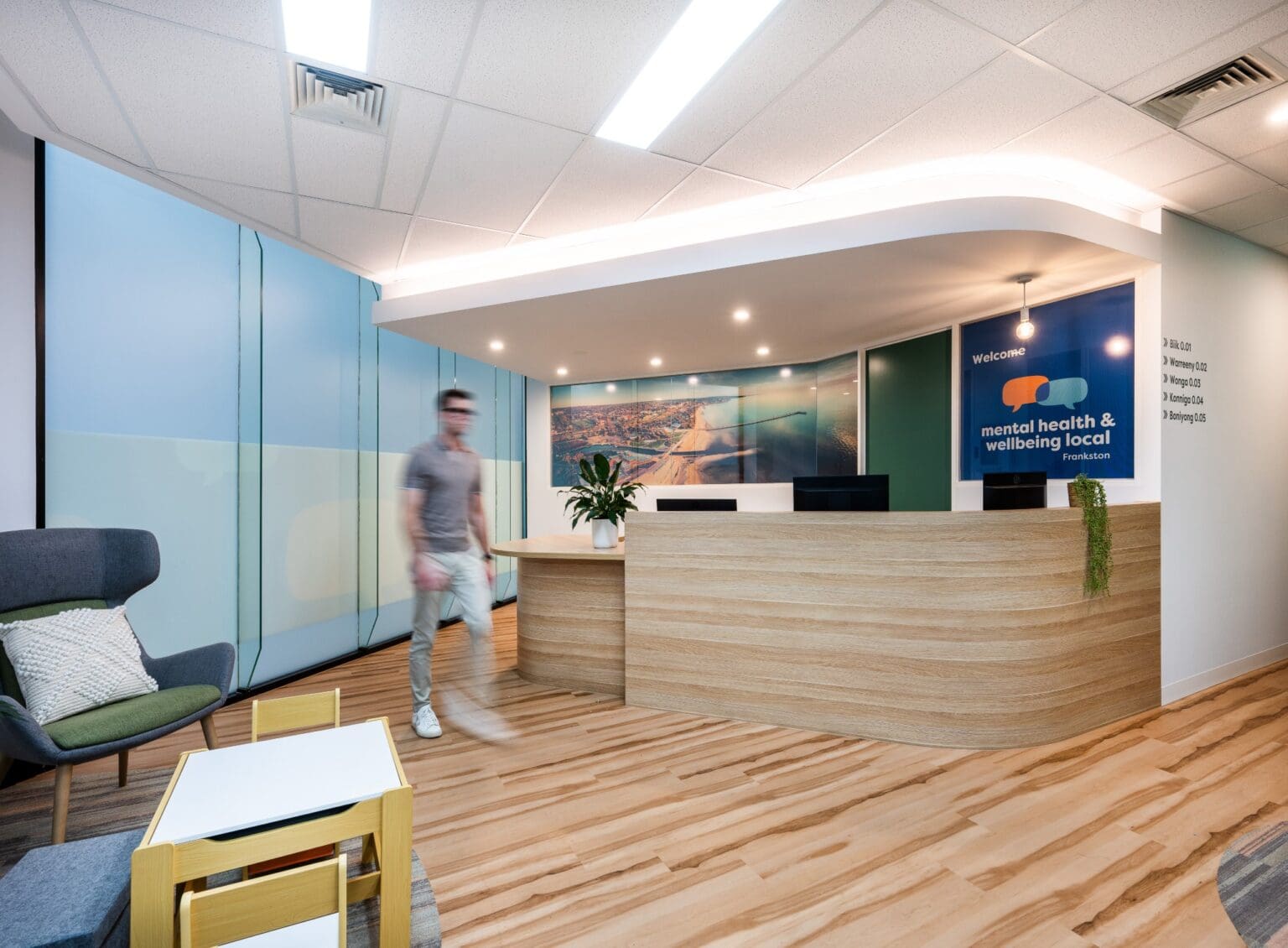
The Frankston VIC Local project epitomizes our dedication to community-centered design and inclusive spaces. Drawing inspiration from the rich cultural tapestry of Frankston, we embarked on a collaborative journey with local residents, businesses, and community leaders to co-create a multifunctional hub that reflects the unique identity and aspirations of the area.
Our design approach prioritised accessibility, sustainability, and versatility, integrating features such as green spaces, gathering areas, and adaptable facilities to accommodate a diverse range of activities and events.
Through effective project management, we navigated regulatory requirements and budget constraints with finesse, ensuring timely delivery without compromising quality. The result is a vibrant, inclusive space that serves as a beacon of pride and unity for the Frankston community.
Since 2014, Interite has proudly partnered with key providers to deliver purpose-built community health facilities across Australia. Our work spans urban, regional, and remote locations—ensuring consistent, quality environments for care, wherever it’s needed most.
Notably, our continued partnership with headspace has seen the successful delivery of 40+ facilities, nationwide.
Interite brings over 40 years of healthcare design and construction experience to community health; a sector with its own distinct planning, funding and operational requirements. Our portfolio includes purpose-built health hubs, community mental health facilities, allied health centres and chronic disease management clinics for government, not-for-profit and private community health operators across Australia.
Notably, our ongoing national rollout with headspace has seen 40+ youth mental health facilities delivered across the country since 2014. This has given us unmatched familiarity with trauma-informed design, PHN commissioning processes and the co-design methodologies increasingly required by Commonwealth and state community health funding bodies.
Our recent work for the Wellspring Women and Girls Health Hub and headspace Bunbury demonstrates our capability in delivering sensitive, inclusive, and clinically functional care environments. View our community health project portfolio or contact our team to discuss your community health facility.
Community health centre design in Australia is governed by a layered regulatory framework that varies by state and territory, funding source and service type. Our team understands these regulatory requirements relevant to community health facilities and ensures compliance is considered from the earliest stages. Our specialised healthcare team monitors the latest healthcare standards, ensuring our designs align seamlessly with mandates from The Department of Health and Aged Care.
We maintain strong cost control through detailed planning, clear budgeting and ongoing financial monitoring. Community health projects often involve multiple services within a single facility, so we focus on managing scope carefully to ensure cost efficiency without compromising functionality, accessibility or our fiscal responsibility to our clients. Value engineering, designing for multi-use and future proofing as facility capacity grows all work together towards staying within budget.
Take a look at our work for Access Health where we consolidated three sites into a single tenancy that utilises a strategic forward-thinking design for service delivery flexibility.
Unexpected issues can arise in community health fitout projects, and Interite's approach is built around responding quickly without compromising project continuity. The biggest risks to community health projects are usually funding and site selection delays, live-service continuity, landlord constraints and late scope changes from multiple stakeholders.
With proactive risk reviews throughout a project, we often mitigate potential challenges before they happen or become urgent. When the unexpected does happen, our experienced healthcare delivery team communicates transparently with all stakeholders, and focuses on solutions rather than problems. We treat any potential disruption to live services, or construction programme delays, as a critical priority.
As a single-point-of-contact, Interite's structured project management of community health facilities ensures all elements of the project are coordinated effectively and drive programme and cost certainty. We build that certainty through our robust construction methodology that clearly defines the delivery pathway, and leaves no gaps in project scope. For operators and funders, that means fewer surprises around compliance, fitout scope and opening readiness.
Explore our work for Wellspring Women and Girl's Health to see the result of a successful community health fitout, delivered on-time and on-budget.
Community health projects often involve boards, service providers, clinicians, landlords, local community representatives and funding bodies. We champion collaborative progress by maintaining open dialogue with all stakeholders across streamlined communication channels, regular meetings and reporting, and real-time updates via our project management platform. By keeping everyone on the same page, at every step, we ensure projects are completed on or ahead of schedule.
To see how we managed communication on a complex project delivering three health and fitness centres across different locations during COVID, take a look at our work with Avanti Health Centres.
Yes, we design community health facilities to remain adaptable as service needs evolve. This includes flexible layouts and infrastructure planning that allows spaces to be reconfigured over time. Our facilities are tailored for adaptability and scalability, reflecting the reality that community health demand often outpaces initial service projections.
Modern community health facility design is increasingly defined by three priorities: trauma-informed built environments, sensory-accessible design, and telehealth-ready infrastructure. Interite's community health design team applies evidence-based principles, creating environments that reduce anxiety and promote therapeutic engagement for consumers who may present with complex psychosocial histories. Sensory design elements are specified in accordance with the Australian Commission on Safety and Quality in Health Care's guidance on mental health environments and the NDIS Quality and Safeguards Commission standards.
Our national headspace facility rollout, with the latest facilities – headspace Bunbury and headspace South Melbourne – demonstrating these principles in practice.
Of course. We’re proud of the community health work we’ve done, and so are our clients. Testimonials are available across our website and you can view our large community health portfolio here.
Our team has delivered community health projects for a diverse range of operators spanning mental health services, youth services, women's health, Aboriginal and Torres Strait Islander community centres, chronic disease management, allied health, and integrated primary care hubs. Don't hesitate to contact us to arrange a reference conversation with a comparable client.
Sustainability is both a values priority and a long-term cost management strategy for many community health operators.
Our commitment to sustainability is embedded across every stage of our projects. We incorporate sustainable design principles through efficient systems, durable low-maintenance materials and long-term operational thinking, helping community health facilities remain practical, resilient and cost-effective over time.
For more information and case studies on our sustainability initiatives, visit our Environment and Sustainability page.
Discover how we deliver exceptional
healthcare spaces across Australia,
with precision and speed.